
For many parents dealing with child custody, it may feel like the end of their world to potentially lose custody of their child or children. Given the amount of emotions that come into play during many child custody battles, having the counsel of an experienced family law attorney in Orland Park on your side may make all the difference.
There are many questions that may arise during custody disputes. Having a team of Cook County child custody attorneys on your side to assist you and make sure all your bases are covered is the safest way to guarantee the best future for your child.
At Tommalieh Law our attorneys are here to help you in these difficult times. Contact our law firm today at (708) 232-0017 to schedule your complimentary consultation.
Which Parent Typically Gets Custody of the Child?
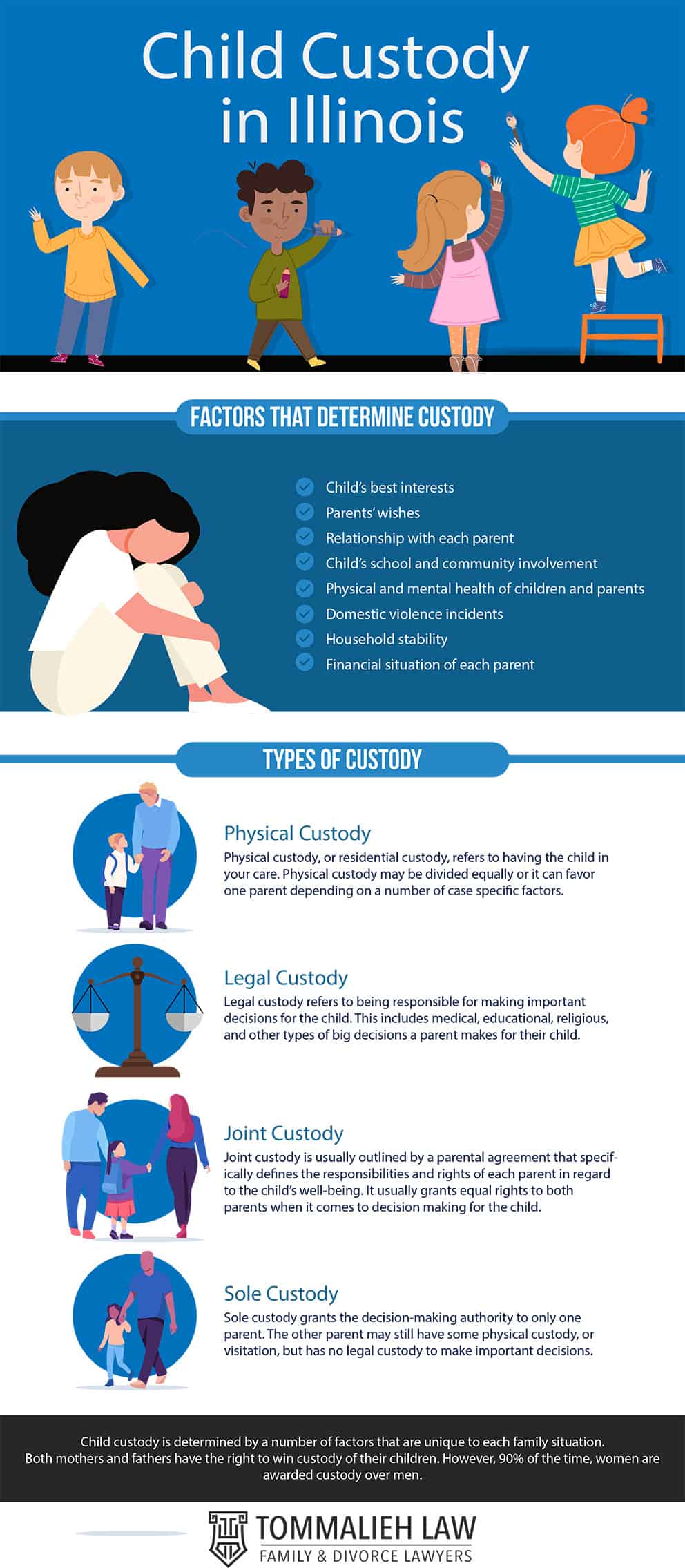
In custody hearings, the court will decide which parent shall receive custody, also known as parental responsibilities, based on the best interests of the child. Given the courts' fallibility, they may or may not make the correct decision based on the evidence presented. For this reason, it is imperative that you have experienced family law representation for child custody disputes. Many factors will be examined as the court determines their decision, such as:
- What the wishes of the parents are
- What the wishes of the child are, depending on their age and maturity
- The child's history with both parents
- The child's history with school and community
- The physical and mental health of all parties involved, including parents, children, and others
- Any history of domestic violence amongst all parties, whether directed at a child or adult
- The perceived ability of the given parties to co-parent amicably
As you can see, there is a lot of information for the courts to take into account before determining which parent will receive custody of the child. For the most part, in Illinois, parents will generally share custody unless one parent is shown to pose a considerable threat to the child or other parent.
What Is the Definition of Legal Custody?
The term “ legal custody ” is used to describe which parent has the power to make important decisions regarding the life of the child. Such decisions may include:
- Where and when the child seeks medical care
- What type of education the child will receive
- What type of religious practices the child will or will not take part in
- Any extracurricular activities the child may take part in
As you can see, legal custody grants the parent the right to make life-altering decisions in regards to the child's life. However, it does not affect whether one parent gets to the see the child or not. Commonly, a mother will be given legal custody but the father will still get routine visitation, essentially having joint custody minus the ability to make key decisions in the child's life.
What Is the Definition of Physical Custody?
As compared to legal custody, physical (residential) custody simply refers to having the child in your care. For instance, in the example above, if a father is allowed routine visitation but not legal custody then he is allowed physical custody. Physical custody can be divided equally or can be made to favor one parent over the other. This all depends on both the interests of the child and the interests of the parents.
How Does Sole Custody Differ from Joint Custody?
Joint custody refers to a joint parent agreement, which is an order that will define both the responsibilities and rights of each parent in regard to the child's general well-being. This includes decisions affecting education, health, and religion. These orders will typically include stipulations allowing for periodic review should the need arise and should also include a protocol for settling disputes between any parties involved. Joint custody doesn't specifically entail equal visitation time but does typically entail equal parental rights.
Sole custody, on the other hand, means one parent has the ability to act in solidarity in regards to the best interests of the child. All decision making regarding the child will be up to them, and they will not have to consult the other party. However, the other party may still have a visitation schedule. As well, the other party will be able to make day-to-day decisions regarding the child while the child is in their physical custody. They will also be able to have access to the child's school and medical records in most situations.
Can a Child Decide Custody Themselves?
The wishes of the child are always going to be taken into consideration when evaluating which parent should be given custody. However, the younger and more dependent the child is, the less of an impact the child's wishes will have on the proceedings. There is no specific age at which the child's decision becomes the ultimate deciding factor, but at the age of 14, the child is able to choose which parent will have custody, but the judge always has the ability to override their preference.
Are Siblings Ever Separated in Custody Hearings?
While siblings staying together is the status quo, as it is generally in the best interest of all parties involved, certain cases can be made to support the separation of two siblings. However, these situations are rare and should be carefully considered, as they may have lasting negative repercussions for the children.

Does Child Custody Affect Child Support Orders?
In the state of Illinois, the amount of child support one party is forced to pay the other may be largely affected by the amount of physical custody both parents have. The more time you are parenting the child, generally, the less child support you are going to have to pay. This, of course, is going to be because you are naturally spending more money on the child when they are in your care. You can review your case with our Orland Park child support attorneys to discuss how much you might expect to pay or receive.
Is a Custodial Parent Allowed to Move with the Child?
Should a custodial parent wish to move out of the state of Illinois with the child, they will need a court order allowing them to do so. In order to obtain this order from the family law courts, they will have to prove that moving out of the state is in the best interest of the child. Moving the child to a separate location within Illinois borders is a different story, typically allowed unless stated otherwise in a specific order. If the non-moving party has any concerns about a supposed move, they may pursue a modification of the current agreement disallowing in-state moves.
How Are Vacations Handled?
Of course, there are going to be times when one parent wants to take the child outside the state on a vacation. In this situation, so long as both parents are communicating pertinent information such as the location of the vacation and the date they can be expected back, the custodial parent is typically allowed to take the child on the vacation with minimal fuss.
Can Custodial Decisions Be Changed?
Once child custody arrangements are finalized, parents are required to follow the stipulations set out therein. However, if both parents agree that something needs to be reprimanded, they can make that decision together privately without needing to file it through the courts. As well, motions to have the arrangements modified by the courts are possible. Having the arrangements changed through the courts is not an easy undertaking and requires significant evidence that custody modifications are in the best interest of the child/children.
What Are Temporary Orders?
Temporary orders are put in place to dictate custodial arrangements while the case is still ongoing. This gives the parties certain protections before the ultimate decision has been made. These temporary orders may also dictate temporary child support payments. These orders will be effective until the permanent orders are finalized and the hearing is over.
Can Someone Besides a Parent Get Custody of the Child?
There are some cases in which a party besides one of the two biological parents may retain custody of a child. While these parties are generally other family members, they may also be a close family friend.
Schedule a Free Consultation With an Experienced Cook County Child Custody Attorney!
If you have found yourself in the midst of a custody battle, or feel that you may be forced into one soon, you should waste no time in getting set up with a team of experienced custody attorneys. Custody decisions are some of the most life-altering decisions a court has the power to make. Given the importance of the decision, you want to ensure that said courts have all of the necessary information and evidence at their disposal before giving their orders. With the experienced legal counsel of Tommalieh Law on your side, you can rest assured that your case is being presented to the courts in the most efficient and sympathetic way possible.
When it comes to your children, there's no room for second-guessing. As a parent, you may feel as if there's no step you wouldn't take so as to ensure the best future for your child. With the right legal representation, custody battles can go off smoothly for all parties involved. While everyone will likely agree that the child's best interests outweigh their own, it is never easy coming to an agreement as to what the child's best interests really are. By contacting our Orland Park law office today for a free consultation, you are taking steps to guarantee the best outcome for you and your child.